


(Updated )
Guam can experience sudden downpours and tropical cyclones. When the weather turns, rethink not just your plans but also where you park the rental car and whether the roads are safe. Here’s what to keep in mind when driving a ONE’S rental car in typhoon and rainy weather.
Under the current ONE’S Rent-A-Car terms, vehicle damage caused by natural disasters—including earthquakes, tsunamis, and typhoons—is not covered by included or additionally purchased insurance. Typhoon insurance is not available, and the terms state that the renter is responsible for typhoon-related vehicle damage.
If a typhoon may be heading for Guam, check official alerts and your hotel’s instructions. Contact ONE’S early if you are unsure about the return time or where the vehicle should be secured.
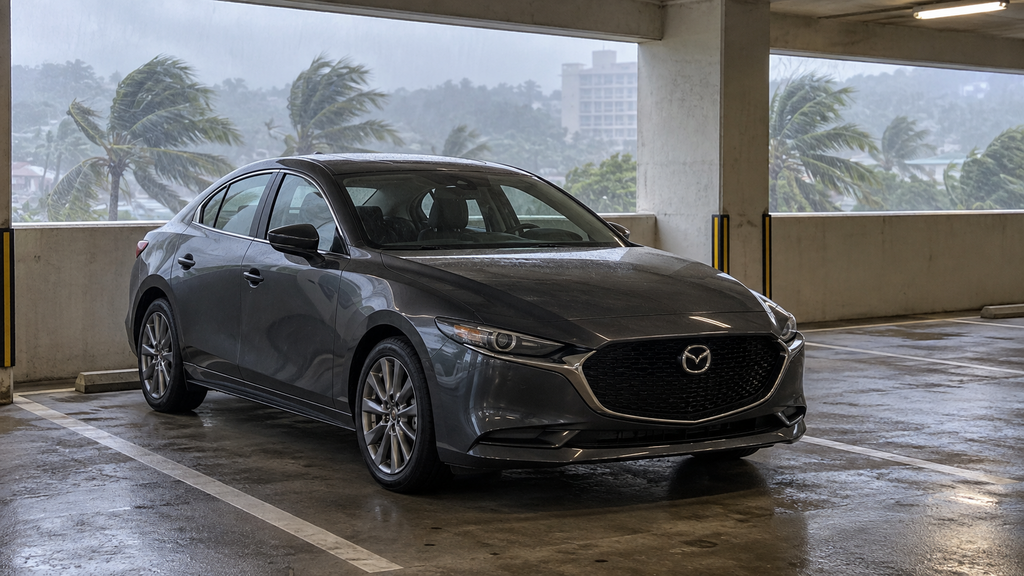
During rainy and typhoon season, keep the vehicle in a secure location. If your hotel has indoor or garage parking you’re allowed to use, follow its rules. A roof alone doesn’t make a spot safe.
Some Guam roads are said to be paved with materials containing coral, which can get slippery in the rainy season. Not every road is the same, but whatever the surface, drive more carefully when it’s wet.
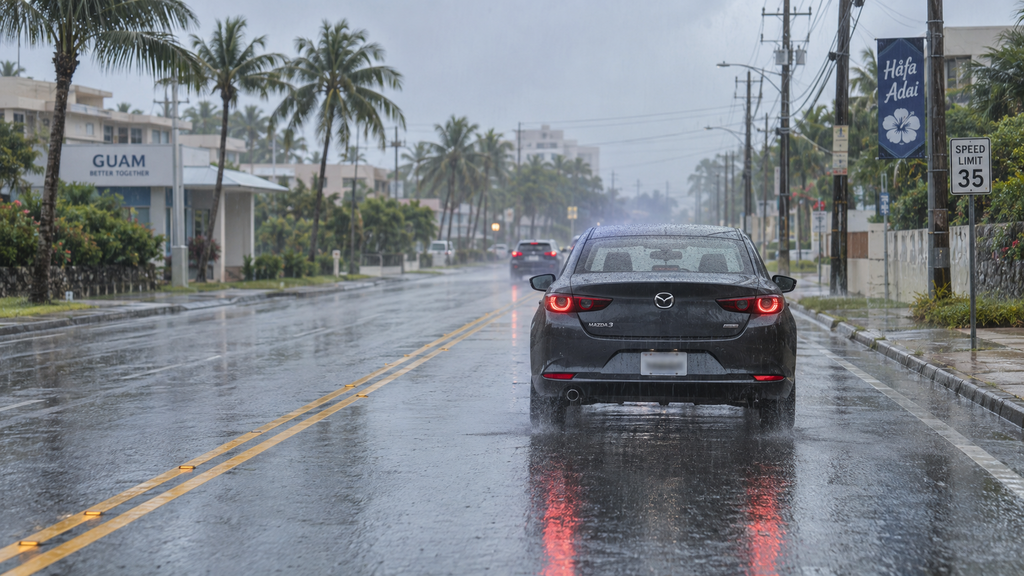
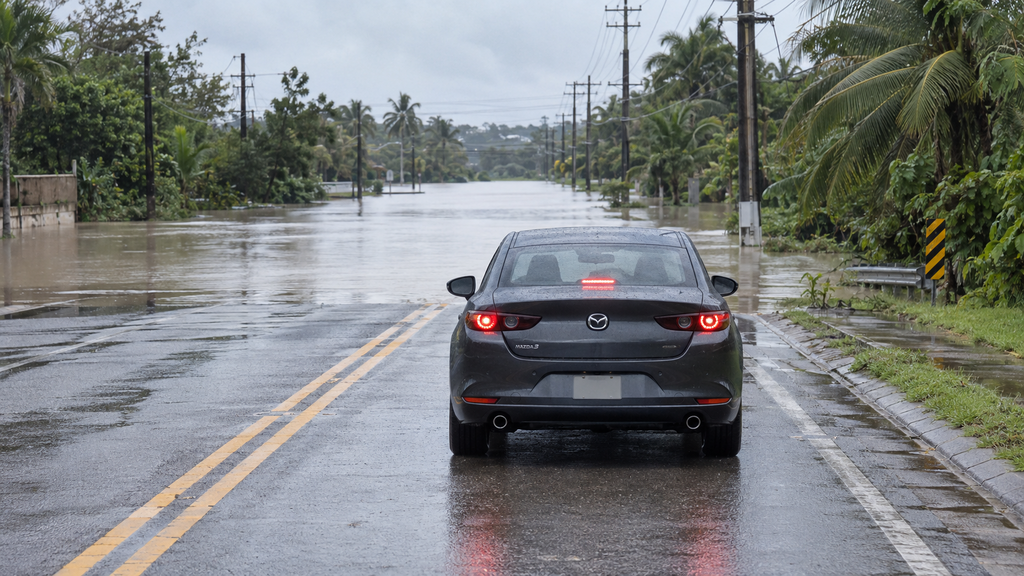
Never drive into standing or moving water if you don’t know how deep it is or what the road is like underneath. Stop well short of it, watch for traffic behind you, and turn around when it’s safe. Don’t sit in a travel lane longer than you have to; move somewhere safe before checking official updates.
Check NWS Guam forecasts, warnings, and Tropical Cyclone Products, plus Guam Homeland Security / Office of Civil Defense (GHS/OCD) notices. Check with your airline and hotel about flight and lodging changes, and contact ONE’S early if your return or an extension may be affected.
Under the current ONE’S terms, vehicle damage caused by natural disasters, including typhoons, is excluded from included and additionally purchased insurance. Check the latest terms and ask staff when you book and pick up the car.
Some roads are commonly said to use materials containing coral and may be slippery during the rainy season. That doesn’t apply to every road. Slow down and avoid sudden steering or braking whenever it’s wet.
Do not enter if the depth is unknown. Turn around only when it is safe and follow official instructions. Call 911 in an emergency.
During Guam’s typhoon and rainy season, understand that natural-disaster damage is excluded from coverage and secure the vehicle before conditions worsen. Keep right, slow down in rain, and never enter a flooded road of unknown depth. Monitor official information and contact ONE’S early when your rental plans may be affected.
Information checked September 13, 2026. Terms and weather information may change. Review the latest ONE’S terms, NWS Guam alerts, and GHS/OCD notices before travel and use.

2019/07/06
2019/07/05

2019/01/10

2019/01/09

2019/01/07